Showing posts with label strength and flexibility. Show all posts

Sunday, August 9, 2015

Making the most of an 'Ole Pau: Phone-to-phone classroom

Hina wore her 'Ole Pau Light, early in the morning Friday, August 7, 2015
One of the decisions I made during the week was to arrange for a phone-to-phone class time with our haumana. I needed to adapt to the weather conditions and my own health. This arrangement seemed to be a flexible and wise choice that kept our commitment to each other pono in harmony. She lives up the Island from us overlooking Penn Cove in Coopeville. She and I had talked about meeting at sunrise for the first August class of Ho'omoku. My request was based on wanting to welcome the sun with the 'oli E Ala E as we watched the sun rise over the Cascade Mountain Range, a view very clearly present from our haumana's Coopeville home. This was several weeks prior to the start date of July 10th. July has been our month of experimentation and course corrections. We are learning plenty!

Pete and I woke early (5:30 AM). I set up our Quonset hut preparing for ceremony and the content of our first phone-to-phone class.
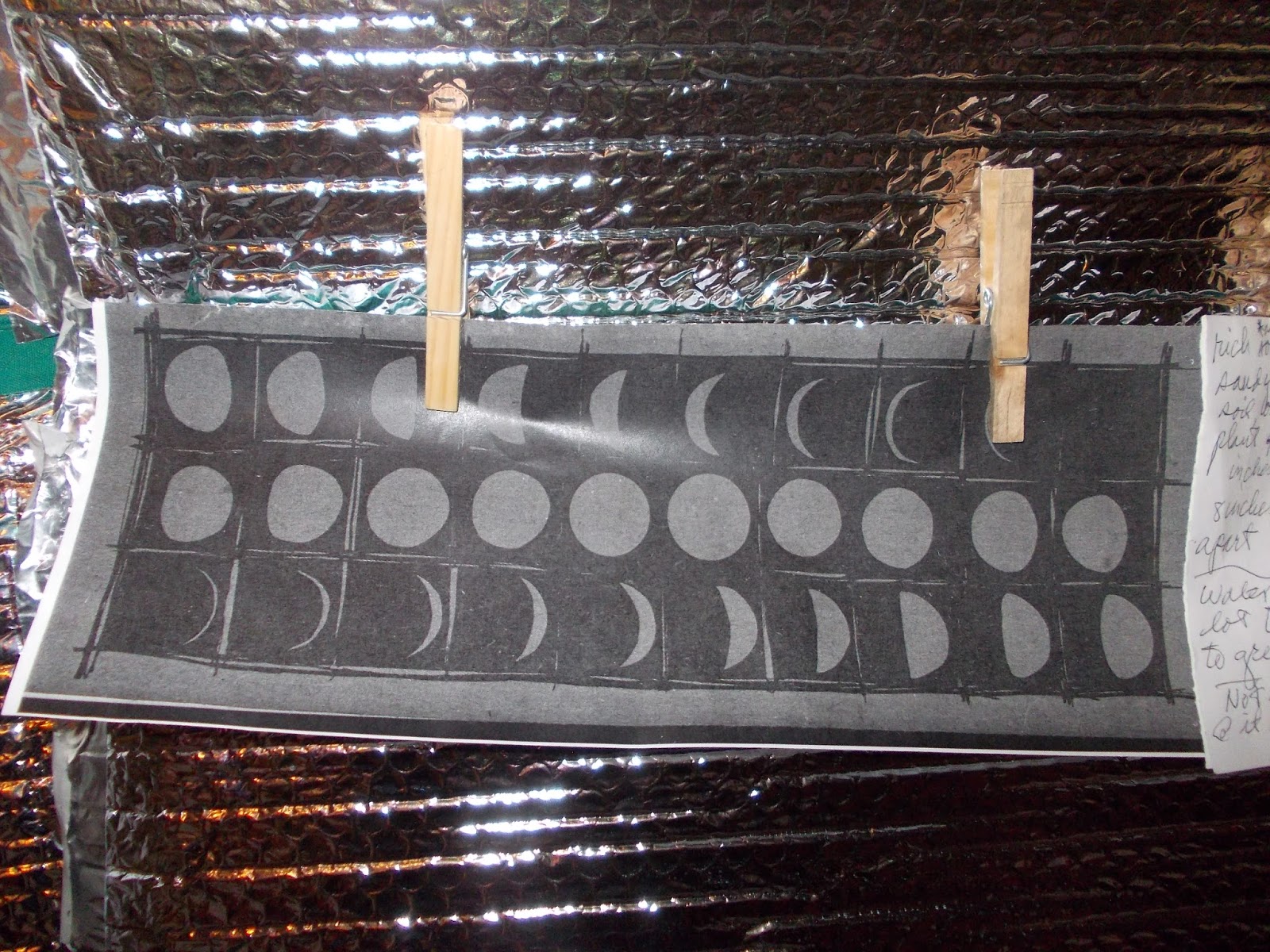
 Kaulana Mahina The Hawaiian Moon Calendar is a major focus for HO'OMOKU. The Hawaiian Moon Calendar created by the folks at The Moon Phase Project is one of our teaching aides. It helps to re-orient, and shake up our Western Calendar brainwaves; to count in 10's instead of 7's and notice the shape of the Moon instead of the brightness of the Sun; while recording what we see/what is growing/birthing/fruiting/dying in our place. 
We strung our HO'OMOKU banner in our Quonset, very home-style classroom; very much in our comfort zone.
Pete was willing(but barely awake) to try this version of teaching/sharing/chanting/learning.
Early next week I'll check in with our haumana and ask how our phone-to-phone experience was for her. This is the Year of the Green Goat by my Chinese Ancestors' reckoning. The year of strength and flexibility like 'ohe the bamboo. So we make like 'ohe and flex. Good practice:)

E ALA E
We did indeed chant and welcome Ka La The Sun from our respective places on the same island; two of us from our Southern woods and the third in her hale up North overlooking Ke Kai and the mountains of the Cascades. Over the phone I spoke the words to get our student familiar with the sounds. She repeated. I continued. We chanted the verse three times, the final time chanting in unison. 

The THANKSGIVING ADDRESS or The Words Before All Else
Whenever we gather for Ho'omoku, and often as a daily practice, we recite the words of gratitude from the Onandaga Nation. Each of us read a gratitude in turn. 

NA 'AUMAKUA
The pule or prayer welcoming and addressing our Ancestors is also part of the ceremony of respect to begin each Ho'omoku gathering. I chanted, and invited Pete and our haumana to name their family, and be included as we acknowledged all the Ancestors.

KAULANA MAHINA
The Hawaiian Moon Calendar, including the phases and names of the moon (29 or 30 of them) is a focus for Ho'omoku. Daily Lunar Calendar recordings written into a personal journal is the primary learning and noticing practice. We shared what we have noticed. Questions were asked, and answered.

E HO MAI
I was asked for clarification and protocol related to the chant E HO MAI. Our haumana wanted to know:

  1. Could this chant be used for various purposes?
  2. Is there a certain way to chant the words/a cadence?
I answered this way:

  1. Yes, this chant was written by Edith Kanaka'ole as a chant to be used in her halau hula her hula school. This chant was intended to be used to gain understanding and insight into the meaning and the mana of the words in mele/'oli to be manifested in hula. Since its origin this chant has been shared across the Earth for many reasons. The answer to this 'oli of asking will be different for every one who asks/chants it.
  2. I said, "I learned to chant this 'oli by listening and imitating the style of Kumu John Keola Lake. The following YouTube was one I trained myself to 'oli." I use this cadence and style when I chant E Ho Mai.


 Slowly we ho'omoku. Mahalo ke Akua e Na 'Aumakua.

Saturday, July 18, 2015

Ceremonies help us remember to remember

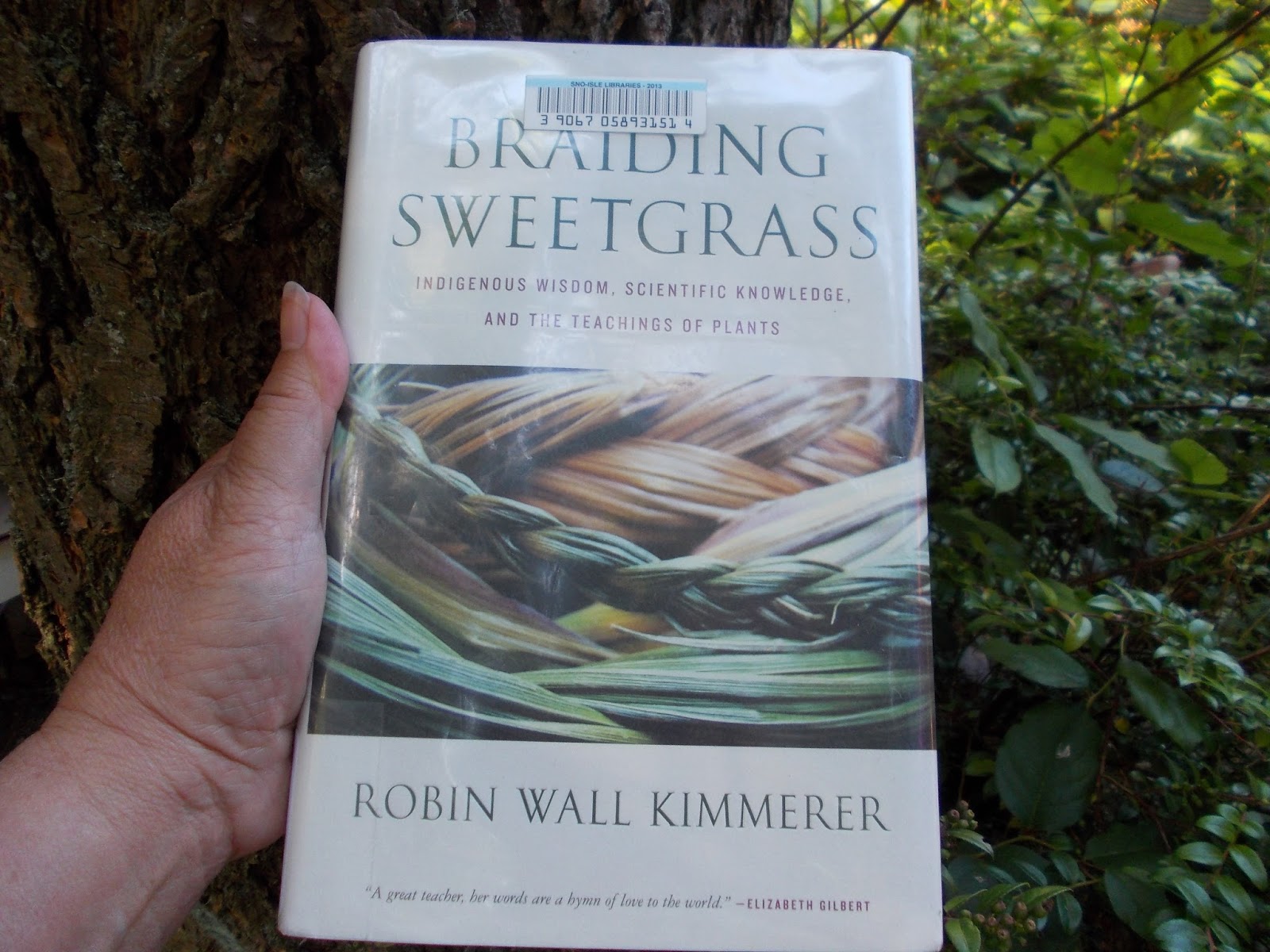
"Ceremonies transcend the boundaries of the individual and resonate beyond the human realm. These acts of reverence are powerfully pragmatic. These are ceremonies that magnify life. In many indigenous communities, the hems of our ceremonial robes have been unraveled by time and history, but the fabric remains strong. In the dominant society, though, ceremony seems to have withered away." - Braiding Sweetgrass, Robin Wall Kimmerer


Created from the memories of deep knowing the protocol of respect for place, and the people and beings who were here first feed the design and essence of home-made ceremony. Challenged to walk a journey with both feet intentionally on the skin of our Island Earth Home, we remember to remember.

On the place the People called 'the prairie front' my husband Pete and I bring our home-made ceremonies, the stories that hold life together, braiding ke'ia with kela, the here together with there. We do it as an everyday practice in spite of the assaulting common product worn by those who wrongly assume their consumption will do no harm. Teaching through example we reel from the triggers of fragrances. We call on the 'ohe, the bamboo to teach us remind us about strength and flexibility.

"We cross borders without regard, ignorant or arrogant of the protocol native to the transitional spaces that take us from this place to that place. Traditions remembered and practiced would maintain and pass along the right things to do, at the right time, and in the right frame of mind. Have we all become wanderers with passports unstamped with the memory of teachings from the Ancestors and Nature? There are rituals to remember and common magic to induce respect for the beings and places that share this planet." 
- from the Introduction" of my medicine story The Safety Pin Cafe 


"We follow the Chinese New Year ... once Makali'i the Pleiades is seen rising on the horizon, the next New Moon the follows marks the beginning of the New Year." - Kalei Nu'uhiwa (Tsuha) Kaulana Mahina


With the moon in her Ku po (phases newly illuminating after New Moon) I stand this post up with a ceremonial and physical boundary setting. Together Pete and I asked 'ohe and the many-times used cedar lattices to help with applying their lessons: Flexible and strong, there is a border to cross consciously, it is in place. We remember to remember that, and give thanks to the wind who is visiting, too. Amana ua no.